
Sherman County Arrest Warrants Explained
Texas Code of Criminal Procedure Chapter 15 governs arrest warrants. An arrest warrant is a written order from a magistrate. It directs a peace officer, or a person the magistrate names, to take the accused into custody. A sworn complaint supplies the facts behind that review. The warrant itself must name or reasonably describe the person, state the offense, and carry the magistrate's signature and office. The local court path turns on the charge. A felony may go to the 69th District Court, whose administrator sits in Dumas. Countywide JP and municipal judges can also act as magistrates within their authority. The Sherman County site posts no electronic warrant platform and no online arrest-warrant roster.
How Chapter 15 Reaches a Sherman County Magistrate
Every warrant starts with paper. A complaint or affidavit identifies the alleged offense and the basis for believing the named person committed it. A magistrate reads it. If the legal requirements are met, the magistrate signs process. From there it may go to the Sherman County Sheriff, the Stratford Police, or another peace officer for service. Sherman County pages do not say how a local warrant is assigned for service or promise any service time. The official Chapter 15 text spells out issuance and the details every warrant must carry. Court structure explains where magistrates and trial courts fit. The Texas court overview gives that background, though local contacts still decide where a particular record lives.
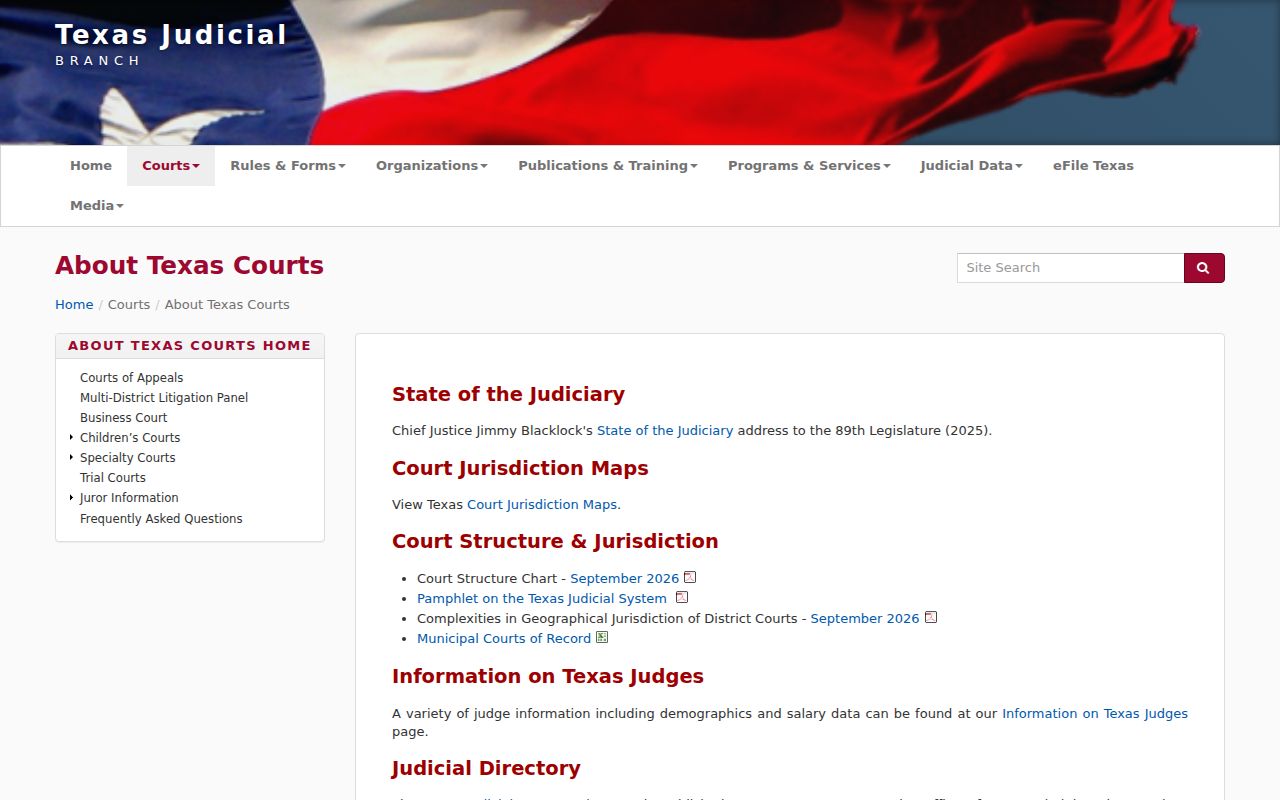
The image covers statewide court roles, not a Sherman County person's case.
Inside a Sherman County Arrest Warrant
Sherman County publishes no sample warrant and no local warrant-number format. Ask the issuing court what its public copy holds. Ask too whether the affidavit can be requested. A case or cause number ties the order to a docket. Bond and status can shift after service or a hearing.
| Warrant identifier | Local number format is not published; request the identifier assigned by the court. |
|---|---|
| Case or cause | Links the warrant to a criminal court file. |
| Issuing magistrate | Name or office of the magistrate and issuing court. |
| Offense | Charge stated in the warrant or complaint, if public. |
| Bond and status | Ask for the current amount, type, and meaning of active, served, or recalled. |
What Article 15.26 Makes Public
Article 15.26 opens executed adult arrest warrants to the public. The affidavit shown to the magistrate becomes public too. Public access has limits. The rule promises no searchable online copy, redactions can stay, and juvenile or sealed files remain closed. Family Code §58.010 makes a child's arrest warrant and supporting complaint confidential, subject to the law's stated exceptions. In Sherman County, split the request. Ask the issuing court for the court record and the Sheriff for the law-enforcement record. The OCA policy explains why those requests differ. If material is withheld, ask whether a redacted copy exists and which rule controls, then read the Texas OCA, whose open-records policy covers Article 15.26 and Rule 12.
Serving Arrest Warrants in Sherman County
The Sherman County Sheriff/Jail is the county's main law-enforcement contact. Sheriff Ted Allen runs the office. The jail sits at 701 N. 3rd Street in Stratford, and the phone is 806-366-5551. The Sherman County site posts no public warrant list, no warrant email, no bond desk schedule, and no walk-in surrender instructions. Stratford Police can be reached at 806-366-3051. Its dispatch line is 806-366-5551. Texhoma's town pages name a municipal court and city office but no warrant division. Ask the Sheriff which agency handles Texhoma service. Remember that a municipal case can stay with its issuing court even when a county deputy or city officer serves the order. The Sheriff's page gives the jail contact, not a full service policy.
District Warrants Use the Dumas Court Route
The 69th District Court serves Sherman County. Its administrator and courtroom sit in the Moore County Courthouse at Dumas. For a district cause, the combined County and District Clerk in Stratford can help locate a filing, and the district administrator gives the court's instructions. Call before you drive. Do not confuse the two locations. The Sherman County jail is not the district courtroom. The administrator's number is 806-935-2700. The County/District Clerk sits at 701 N. 3rd Street, phone 806-366-2371. Ask which office holds the document, whether the matter is sealed, and where any hearing will occur. The Sheriff/Jail can answer a separate custody question. The county's District Court page lists the Dumas contact, and the District Clerk page points to iDocket case records.
Comparing Arrest, Summons, and Bench Warrants
Each paper demands a different response. An arrest warrant authorizes custody on a magistrate's order. A summons just tells a person to appear. A bench warrant is court process that can follow a missed setting or another court obligation. In Sherman County, the underlying court and cause decide which instrument applies.
| Process | What It Does | Local First Step |
|---|---|---|
| Arrest warrant | Directs a peace officer to take a person into custody | Call issuing court and Sheriff/Jail |
| Summons | Directs a person to appear as stated | Follow the date and court on the paper |
| Bench warrant | May follow a missed appearance or order | Contact the court that set the case |
A summons is not a warrant. Still, never assume a missed Sherman County court date carries no consequence; ask the court which order it issued and what remedy is available.
Federal Warrants Use a Separate Northern District Route
Federal charges never land in a Sherman County justice court, municipal court, or the 69th District Court. They belong to the U.S. District Court for the Northern District of Texas. That district places Sherman County in its Amarillo Division. The U.S. Marshals Service runs an Amarillo office and a North Texas Fugitive Task Force. Neither one gives the public a name-search form. They handle routing and custody questions instead. The federal courthouse sits at 205 Southeast 5th Street, Amarillo, and its phone is 806-324-2350. The USMS task force number is 972-595-5450. If a federal warrant seems likely, talk to a lawyer rather than guessing from a docket search. The USMS courthouse page identifies these federal locations and the service route they cover.
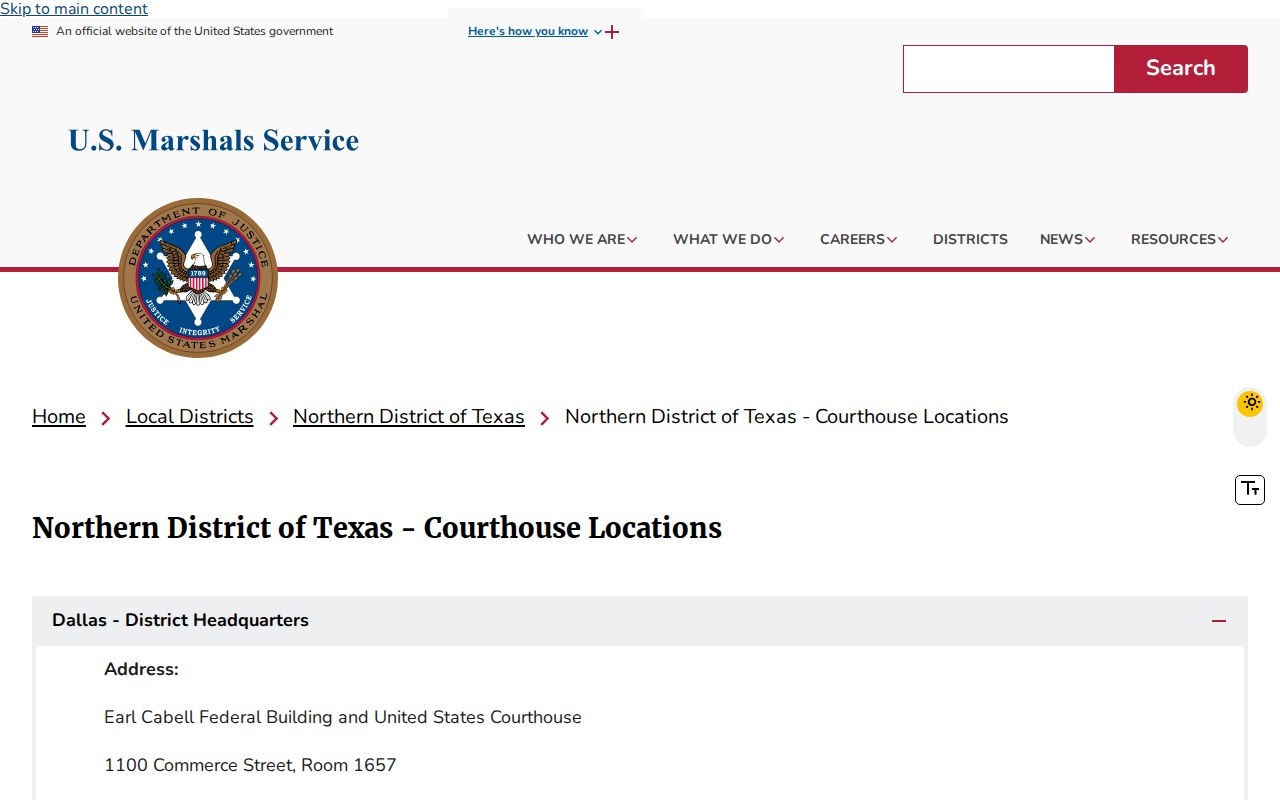
It is a federal contact source, not a county arrest-warrant listing.
Federal Dockets Do Not Prove No Warrant
PACER is not a federal warrant search. It lists dockets and filed documents, not a plain list of open warrants. Sealed papers stay hidden. Fees run $0.10 per page, capped at $3 per document, and they vanish when quarterly use stays at or below $30. Free viewing is possible at a public terminal inside a courthouse. CourtListener or RECAP can carry copies of filings, yet neither can certify that a federal warrant does not exist. The official PACER pricing page spells out the fees and access rules. Bring a case number if you have one. For the right next step in Sherman County, ask a lawyer or a federal court clerk, and remember that PACER pricing governs federal dockets rather than Sherman County court records.
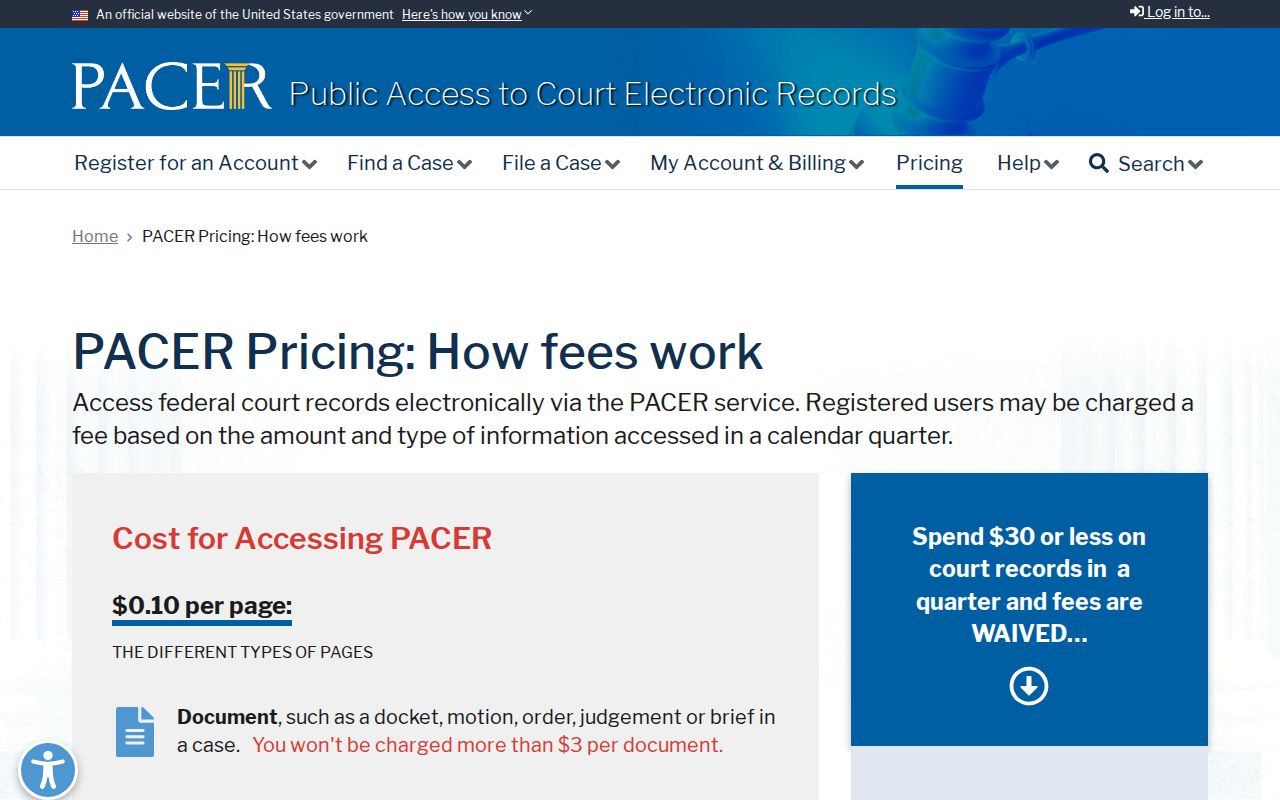
A public docket search is not a definitive warrant check.
If There's an Arrest Warrant for You
Call first. Reach the issuing court and the Sherman County Sheriff or jail before you show up anywhere, then talk to a defense attorney. Ask for the cause number, the warrant type and status, and the bond amount and type. Confirm whether you need a motion, a court appearance, or a voluntary surrender arrangement. The public Sheriff page does not list a walk-in window, booking hours, or accepted bond payment methods.
Important: Do not assume that arriving at the courthouse avoids arrest. Confirm the surrender plan and legal options with counsel and the issuing court first.
Texas Chapter 17 sets the clock. A magistrate must make an individualized bail decision without unnecessary delay, and no later than 48 hours after arrest. Booking steps and bond terms vary by case in Sherman County. A bond secures release, but it does not end the underlying criminal case. Keep your court instructions and receipts, then ask the court and the Sheriff separately whether their records now show service, recall, or release.
After an Arrest, Ask About Bond and Magistration
Start with the Sheriff. If Sherman County custody is confirmed or a surrender is on the table, ask exactly where to report and how booking proceeds. No public Sherman County source states after-hours intake rules, bond-window hours, video-magistration times, or accepted payment types. The court may set a personal, cash, or surety bond under Texas law. The county publishes no bond schedule. After arrest, ask when a magistrate reviews bail, what conditions apply, and which court holds the next hearing. Keep the cause number and any bond receipt. If a court later recalls or modifies an order, ask its clerk how the Sheriff gets notified and when each system will show the change.