
Sherman County Active Warrants Explained
An active warrant is one the issuing court has not yet marked served, recalled, quashed, or otherwise cleared. Sherman County posts no public online list that would let you confirm that status for yourself. The official Sheriff page gives a jail contact and stops there. There is no warrant form, roster, dedicated warrant line, or update schedule anywhere on it. A name you cannot find on a website proves little. A municipal warrant may sit with Stratford or Texhoma instead, and juvenile or sealed matters stay out of public view. Only the issuing court controls case status, so confirm there. The Sheriff handles a separate service or custody question.
Sherman County Has No Published Warrant Roster
Sherman County publishes no full active-warrant list, no most-wanted roster, and no searchable name interface on its county or Sheriff pages. There is no countywide count and no "last updated" date either. That gap matters. A third-party name list is not a substitute for an official Sherman County source, and treating it as one invites errors. For a lower-court case, call the issuing JP or municipal court. For a county or district case, call the combined County and District Clerk. The Sheriff or jail can confirm its own service record, while a city citation question belongs to the city court, which may be the only office that knows the current status. The Sheriff's Office contact page is the published law-enforcement route, not a roster. The District Clerk page shows where county and district case records begin.
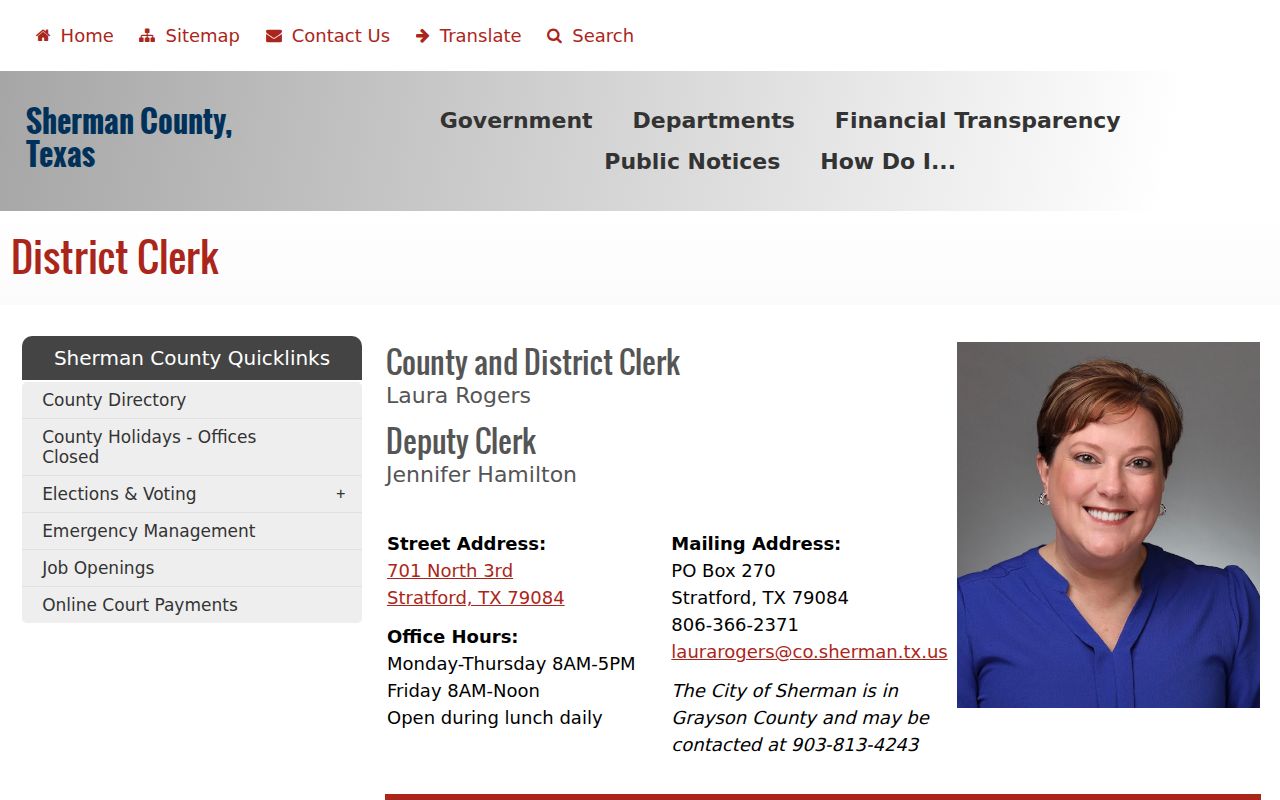
Clerk-linked court records in Sherman County can identify a case, but only the issuing court confirms warrant status.
How Sherman County Tracks Active Warrants
Sherman County keeps its warrant-related records in separate hands. The Sheriff, the countywide JP courts, the Stratford and Texhoma municipal courts, and the shared 69th District Court each hold their own piece. Court records control hearings and recall. The Sheriff holds custody and service details. When a participating court reports a failure to appear or a failure to pay, DPS or OmniBase gets a license-renewal compliance entry, which is a different animal from a warrant record. No Sheriff publishes an update cadence here, and no cross-court roll-up exists. These systems do not move in lockstep, so ask each office when its own status last changed. Keep one more caution in mind: a payment receipt proves only that payment was submitted. It does not prove the warrant was recalled or that a Sheriff entry came down.
That last figure covers a court-reported DPS compliance update in Sherman County, not a warrant recall.
OmniBase Is Not an Active-Warrant List
Texas DPS and OmniBase run a failure-to-appear and failure-to-pay compliance program for participating courts. They offer no public Texas warrant search. OmniBase states plainly that its database holds no warrant information. A license-renewal hold can hint at an unresolved court obligation. It cannot show that a Sherman County warrant was issued, served, or cleared. Call the court that reported the item and ask what compliance it wants. If a warrant question remains, phone the court and the Sheriff separately rather than relying on one answer. Do not stop at seeing a license issue removed. That update and an arrest-warrant record are different records. The OmniBase FAQ describes the FTA/FTP program and its limits. Use it for program status, then call the issuing court about any warrant.
Inside an Active Warrant Record
Sherman County displays no public sample listing, no status-code dictionary, and no local warrant-number format. So treat any field list as a set of questions to ask, not a claim that a county database shows every item. Ask whose record it is: the court's, a serving agency's, or both. Request plain-language meaning for any unfamiliar status before you act on it.
| Case number | Links the warrant to the court file. |
|---|---|
| Issuing court | Names the JP, municipal court, or district court with authority over the case. |
| Type and reason | May be arrest, bench, capias, or capias pro fine process. |
| Date and status | Ask whether it is issued, served, returned, recalled, or active; local codes are not published. |
| Bond or amount | Case-specific. No county schedule was found. |
Warrant Roundups and Most-Wanted Lists
Sherman County runs no most-wanted program, public roster, roundup, amnesty week, reward, partner list, or event notice. Stratford Police offers a general tip form, though its official page never labels it a warrant program. Texhoma publishes a citation-payment route, not a named-warrant list. The county does not put individual warrant details on its Sheriff page. The gap between a curated most-wanted feature and a full active list is worth understanding. A named program would spotlight a few people for public notice, while an active-warrant database would reach far wider; Sherman County has neither. The Sherman County Most Wanted List page covers this absence and points to the right contact channels without posting names or photographs. To share a tip or ask about an active case, use the public contact for the agency involved. Never approach a person or trust a reposted roster.
When Your Name Is on the Warrant List
Sherman County publishes no public warrant list you can check on your own. So once a court or a deputy confirms a warrant, press for specifics. Get the issuing court, the case number, the exact process, its current status, and what happens next. A lawyer can then lay out your options, whether that means requesting a reset, moving the court to recall or quash the warrant, arranging a walk-through, appearing, or posting bond. The Sheriff's page offers no booking, surrender, or bond-window instructions, so plan through counsel or the court itself.
Important: Call the issuing court and Sheriff before appearing; confirm surrender, bond, and filing instructions because local walk-in hours are not published.
Once the court acts, get written confirmation and ask when the Sheriff will update its own separate record. An FTA or FTP hold needs its own call to the reporting court about DPS or OmniBase timing. For how each venue resolves a case, the Sherman County bench warrant instructions differ by JP, city, and district court.
Public Access to Sherman County Warrant Records
Who holds the record decides how you get it. Sheriff-held operational records fall under the Texas Public Information Act, and you can request them though protected material stays exempt. Court case records follow a different rule, Texas Rule of Judicial Administration 12, and must be requested from the court or clerk that holds them. Warrant material splits further. Under Article 15.26, an executed adult arrest warrant and its supporting affidavit are generally public, while juvenile warrant material stays confidential under Family Code §58.010. The Texas OCA open-records policy walks through the judicial-record route and explains how executed arrest warrants open up. That policy is where the access distinction itself comes from.
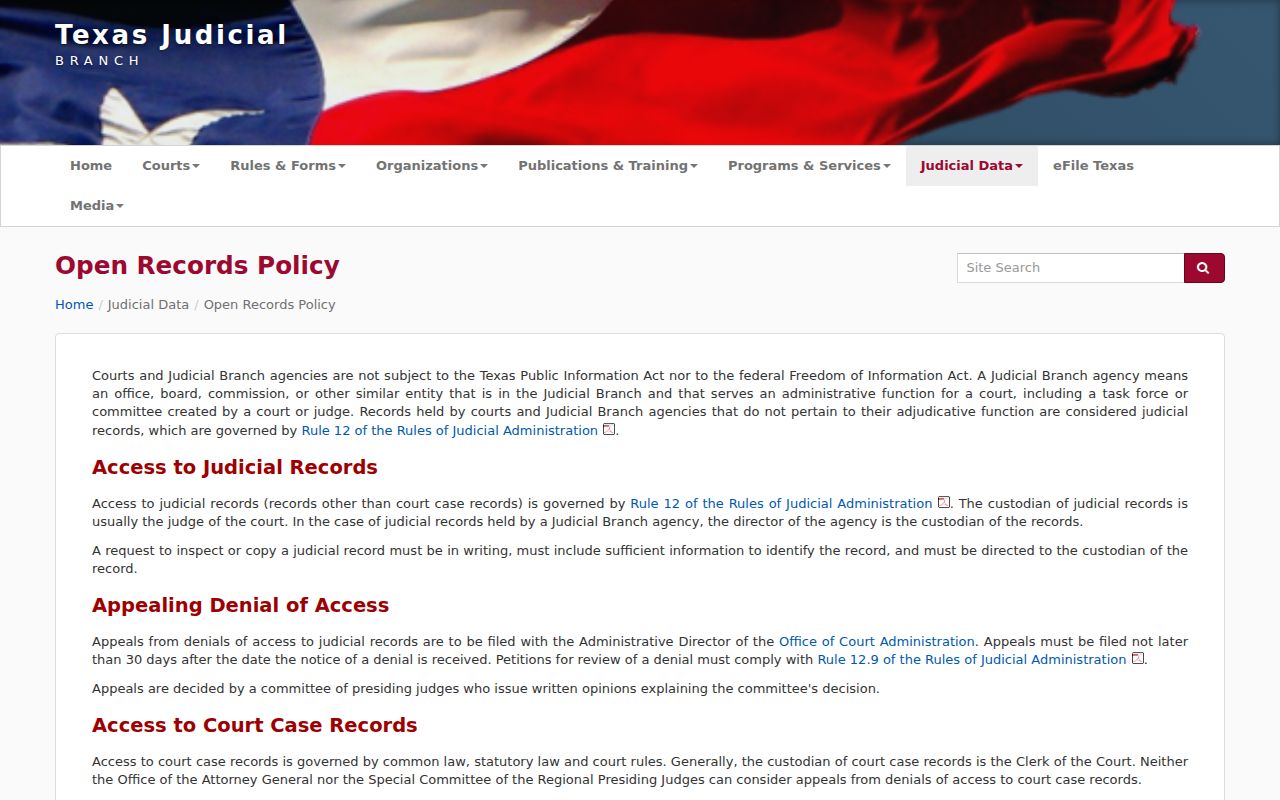
Public access is record-specific; it is not a promise of a complete online roster.
Checking One Court Against Another
A hit in one office's system can be missing from another's, so note what each one controls. The JP or city court explains its own case and recall process. The Clerk routes county and district case records. The Sheriff can say whether it holds service or custody information. No single source covers every Sherman County court, and DPS or OmniBase explains a reported compliance hold.
| Source | Useful for | Does not establish alone |
|---|---|---|
| Issuing court | Case status, next date, recall, or payment instruction | Separate Sheriff update |
| Sheriff/Jail | Local service and custody questions | Full municipal court file |
| Clerk/iDocket | County or district case record | Every JP, city, sealed, or unserved record |
| DPS/OmniBase | Reported FTA/FTP compliance | Warrant existence or service status |
Asking for Written Status Confirmation
When a phone call leaves you unsure, ask the right office how to submit a written request and what it can release. A strong request names the office, the record type, a date range, and any known case number. Sherman County has no local warrant-specific form, no set fee, and no promised response time. Don't borrow a land-records fee and paste it into a warrant request. For a law-enforcement record, ask the Sheriff about its current Texas Public Information Act process. For a court record, write the JP, the municipal court, or the County/District Clerk under Rule 12. If phone confirmation isn't possible, the office can tell you what identification or case details it needs and how to send them securely. Keep whatever response you receive with the citation or court notice. A record's code, whether active, served, or returned, may carry a local meaning the office needs to explain. File it all together anyway, because that paper is your proof of where the Sherman County case stands.